
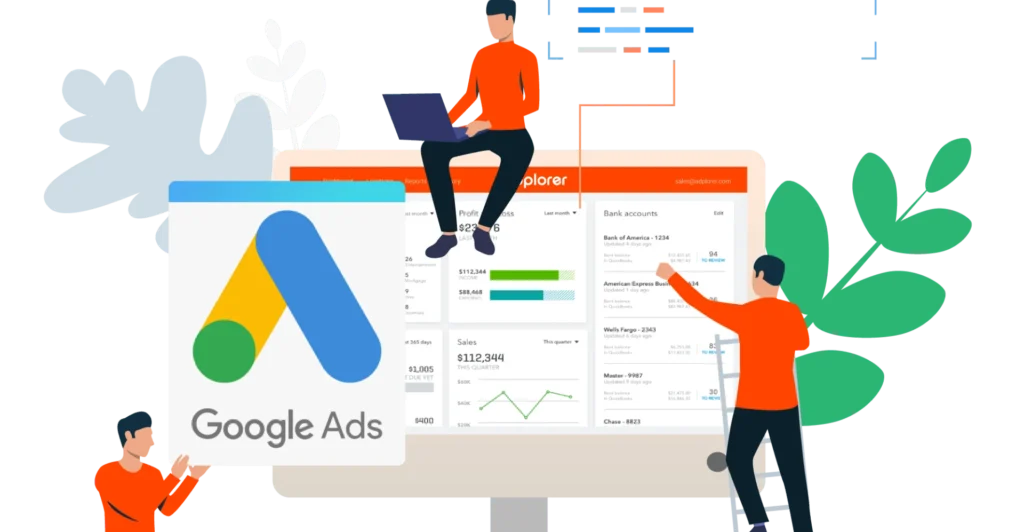
Google Ads continues to be one of the most powerful digital marketing channels-but in 2026, it’s no longer enough to simply “run” ads. Rising competition, evolving AI-driven algorithms, and shifting user behaviour mean that Google Ads optimisation has become essential for achieving strong results without overspending.
Whether you’re a business owner, marketer, or agency professional, this guide breaks down the most important optimisation strategies you need to succeed in 2026-explained in a simple, human way.
What Is Google Ads Optimisation in 2026?
Put simply, Google Ads optimisation is the ongoing process of improving how your campaigns perform. Instead of setting up ads and hoping they bring results, optimisation ensures that:
- Your ads reach the right audience
- You pay the lowest possible cost per click
- Your Quality Score improves
- Your landing pages convert effectively
- Your campaigns consistently generate ROI
In 2026, optimisation is heavily influenced by automation, AI, and user intent signals-making structured and data-backed improvements more important than ever.
Why Does Google Ads Optimisation Matter So Much in 2026?
Competition on Google Ads has increased, and CPCs continue to rise every year. Without optimisation, you’re likely to:
- Waste money on irrelevant clicks
- Lose visibility to competitors
- Experience poor conversion rates
- Damage your Quality Score
- Struggle to scale campaigns
On the other hand, a well-optimised campaign helps you:
- Lower your CPC
- Increase CTR
- Improve Ad Rank
- Boost conversions
- Stretch your budget further
Essentially, optimisation ensures every rupee you spend works harder for your business.
Top Google Ads Optimisation Strategies for 2026
Here are the most effective and human-friendly ways to optimise Google Ads this year.
1. Rebuild Your Keyword Strategy Around Intent
User behaviour in 2026 is more intent-focused than ever. Instead of targeting hundreds of keywords, smart advertisers now target clusters of intent.
What to do:
- Use exact and phrase match for high-intent searches.
- Use broad match only when you have enough conversion data.
- Constantly refine using the Search Terms Report.
- Add negative keywords every week to avoid irrelevant clicks.
Well-chosen keywords act like a filter-bringing only the most relevant users to your ads.
2. Write Ads That Sound Human, Not Robotic
Since AI-generated ads are everywhere now, users respond more to ads that feel real, clear, and relatable.
Optimisation tips:
- Use simple, benefit-driven language.
- Mention your USP clearly (fast delivery, expert support, best pricing, etc.)
- Include the keyword naturally in the headline.
- Use action-driven CTAs like “See Pricing,” “Book Consultation,” “Get Started Today.”
- Continuously A/B test 2–3 versions.
Small tweaks in ad copy often lead to big jumps in CTR.
3. Use Smart Bidding-but Don’t Rely on It Completely
Google’s Smart Bidding has become smarter in 2026, but it still needs clean, structured data to perform well.
Best bidding strategies to use:
- Maximize Conversions for early-stage campaigns
- Target CPA when you know your ideal cost per lead
- Target ROAS for eCommerce or revenue-based objectives
- Maximize Clicks for traffic-building campaigns
Give the algorithm time-avoid making major edits during the learning phase (usually 7–14 days).
4. Strengthen Your Landing Pages
Your landing page has more impact on ad performance today than ever before. Google evaluates user experience deeply, and even slight friction can reduce conversions.
Focus on improving:
- Page load speed (aim for under 2.5 seconds)
- Clear and relevant messaging that matches your ad
- Trust elements like reviews, awards, and case studies
- A single, bold CTA
- Mobile responsiveness
Even a 10% improvement in landing page experience can significantly reduce your CPA.
5. Build a Strong Quality Score Foundation
Quality Score remains one of the most important Google Ads optimisation factors in 2026.
Quality Score depends on:
- Expected CTR
- Ad relevance
- Landing page experience
To improve QS:
- Keep tight, single-theme ad groups
- Align keywords → ads → landing pages
- Continuously test different ad variations
- Keep search intent at the center of your strategy
Higher Quality Score = lower cost + better results.
6. Use Advanced Audience Targeting
Keywords alone don’t guarantee results in 2026. Layering audience signals helps Google understand your ideal customer.
Useful audience types:
- In-market audiences (ready to buy)
- Custom intent audiences
- Remarketing lists
- Customer match (first-party data)
- Life event audiences
The more Google knows about your user, the better it optimises your campaigns.
7. Clean Up Wasted Spend Regularly
Wasted spend is one of the biggest silent killers of ROI in Google Ads.
Reduce wastage by:
- Adding negative keywords weekly
- Pausing keywords with low CTR or zero conversions
- Excluding non-performing locations
- Adjusting bid modifiers for devices/time/day
- Monitoring placements on Display campaigns
A cleaner campaign always performs better.
Advanced Google Ads Optimisation for 2026
For marketers ready to take things to the next level, consider these tactics:
- Use RSA pinning for better message control
- Add image, price, sitelink, and callout extensions
- Optimise creative assets for Performance Max
- Leverage first-party CRM data for remarketing
- Use Auction Insights to benchmark against competitors
- Test keyword less campaigns using Demand Gen
The key is to keep experimenting and adapting to new platform features.
Conclusion
Google Ads is still one of the most powerful tools for business growth in 2026, but success depends on smart, consistent optimisation. With a refined keyword strategy, better ad copy, strong landing pages, and data-driven bidding, you can significantly improve your results and reduce ad spend.
Whether you’re running small local campaigns or large-scale performance marketing, Google Ads optimisation is the backbone of achieving sustainable growth.
If you would like help improving your ads or want a customised optimisation checklist for your business, feel free to ask – we’d be happy to support you.


Leave a Reply